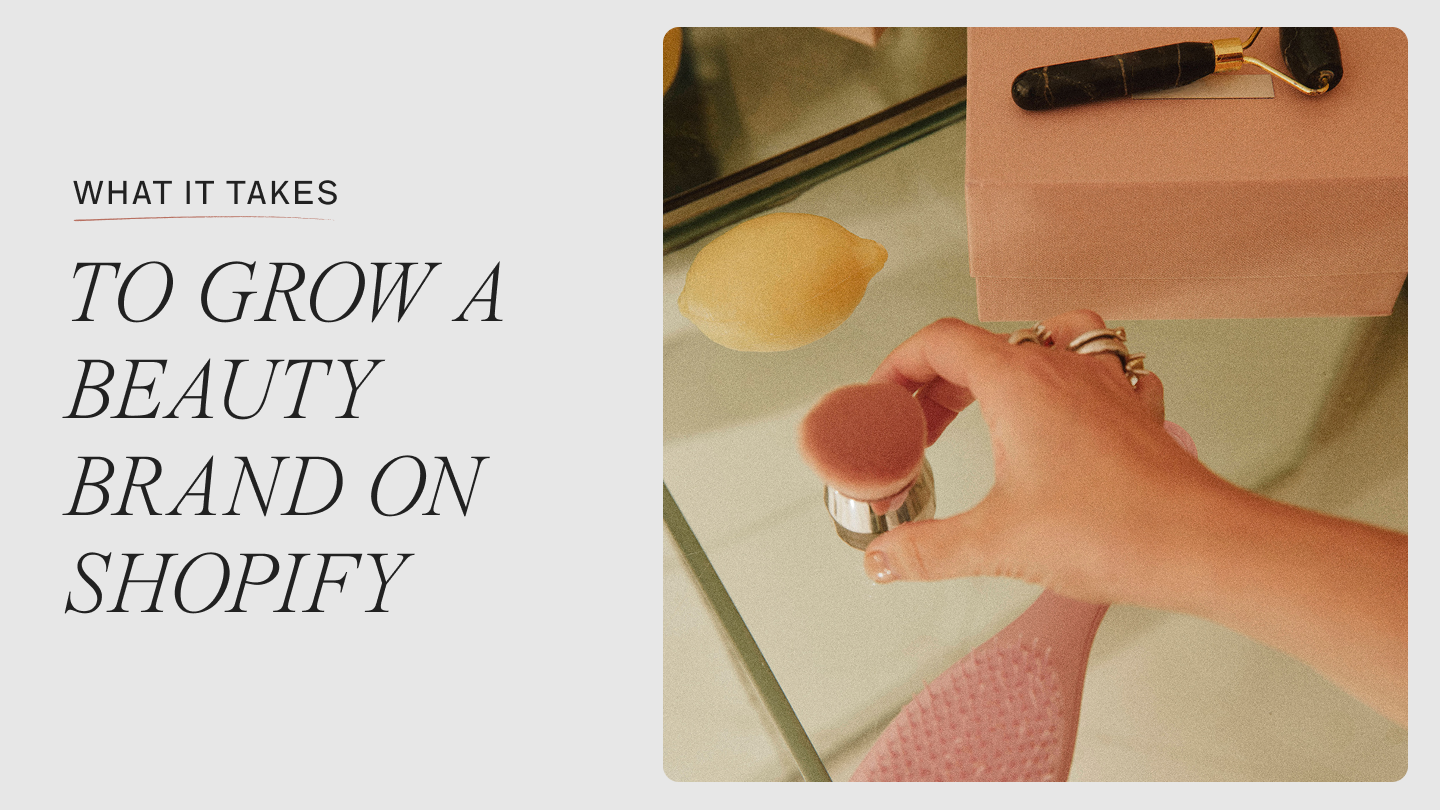
What It Takes to Grow a Beauty Brand on Shopify
Most of what it takes to grow a beauty brand happens in rooms no one sees. The call about whether a shade range launches now or waits a season. The debate over how a formula quiz should ask its first question. The decision to sequence a warehouse move around a peak so revenue never blinks. For 16+ years, we've been in those rooms, doing the work behind some of the most recognized names in beauty. That work is why BeautyMatter named 1r its 2025 Best Marketing Agency, and it's the reason we can say what follows with confidence.
Beauty is one of the hardest categories in ecommerce, and it's only getting harder: the category's boom has pulled in a flood of new brands, and acquiring a customer keeps getting more expensive for everyone. The factors that determine whether a brand grows in that environment are rarely the ones brands worry about first. They're the quieter ones you only learn by being close to the work, again and again, until the patterns are obvious. Most of the brands we've grown run on Shopify, and a few of the same lessons come up on nearly every one.
The storefront is a statement about the product
Design in beauty is not decoration. It's a signal about the formula inside.
Beauty consumers are the most visually literate shoppers in ecommerce, and a site that looks templated tells them something about what's in the bottle before they read a word. Meeting that standard is craft: editorial art direction and merchandising built around how beauty is actually shopped, by shade, by concern, by ritual, by ingredient. When we redesigned Westman Atelier, the whole job was holding a luxury, clean-beauty standard in a saturated market, so the experience felt as considered as the product. And increasingly, that storefront isn't only being read by shoppers: AI assistants now recommend beauty products by reading a brand's catalog data directly, which makes how your products are structured and described a growth channel of its own.
The first purchase is full of doubt
A beauty site has to answer the questions a counter associate would.
Will this shade match? Will this work for my skin? In a store, someone answers those out loud. Online, the experience has to do it, through shade finders, diagnostic quizzes, ingredient education, and product pages that carry a consultation's worth of reassurance. A quick way to find your gaps: list every question your customers ask before they buy, then check how many your product pages actually answer without a shopper leaving to search elsewhere. When we rebuilt Function of Beauty's custom formula experience during its move to Shopify, the new site turned that doubt into engagement: more than 30,000 quiz completions in the first week, at a 73% completion rate.
The money is in the second purchase, not the first
Beauty is a replenishment business, so retention is the growth engine, not a support function.
The brands that pull ahead build for the reorder from day one, with lifecycle marketing, subscription logic, and post-purchase experiences designed to bring someone back before a competitor's ad reaches them. On Shopify, that means wiring subscriptions, Klaviyo flows, and post-purchase offers into one system rather than a stack of disconnected apps. The quickest gut check on where you stand: look at what share of revenue comes from returning customers. In beauty, if it's sitting well under a third, the reorder engine isn't built yet. With Maison Louis Marie, we ran paid media, SEO, email, and SMS as one program rather than separate lanes, and revenue grew 200% after the redesign.
The site can't just repeat the shelf
Most prestige beauty brands sell through Sephora or Ulta while building direct, and the DTC site has to earn its own reason to exist.
That means experiences, exclusives, and first-party data that retail can't offer, so direct becomes the place the brand is most itself. When we migrated VIOLET GREY to Shopify, we sequenced it around a simultaneous warehouse migration and ERP integration so the brand's most important selling season never took the hit. The direct channel came out stronger, not just relocated.
Every beauty category, understood on its own terms
Beauty isn't a single category. A fragrance house and a haircare brand share a shelf but grow in different ways, and knowing those differences inside out is what lets us do right by each one. In prestige and luxury, with brands like goop and Tula Skincare, creative standards are non-negotiable and the digital experience has to match the counter. In celebrity and founder-led launches, like Makeup By Mario, WYN Beauty by Serena Williams and DIBS Beauty, momentum is the asset, and the platform has to scale as fast as the audience shows up.
Skincare is its own discipline. With brands like ZO Skin Health and Philosophy, the purchase is education-heavy, and ingredient storytelling drives both conversion and retention. Haircare and extensions, like Bellami Hair, Donna Bella Hair, and Hidden Crown, are high-consideration buys where shade matching and fit confidence decide the sale. And fragrance, with Maison Louis Marie and Archipelago, resists digital by nature, which makes brand world-building and sampling the entire conversion story.
Why the work stays connected
The reason we can be in every one of these rooms is that we don't split the work across disconnected vendors. As a full-service Shopify Platinum Partner and Klaviyo Platinum Partner, we keep strategy, design, development, paid media, and lifecycle under one roof, so the people who scope a beauty brand's growth are the people building it. Beauty problems don't divide cleanly into design versus marketing versus development, and the team shouldn't either.
That's also why every engagement starts with Discovery, where the beauty-specific questions get answered before design begins: how the second purchase gets earned, how the direct site earns its place next to Sephora or Ulta, how a shade finder or formula quiz will actually convert. The infrastructure that decides beauty margin gets built in from the start, not retrofitted later when it costs far more.
Choosing a Shopify agency for your beauty brand
If you're weighing agencies for your beauty brand, the ones worth hiring are the ones that have done the category-specific work before, the retention systems, the shade and formula experiences, the migrations timed around peak, and can show you what it produced. That's the most useful thing to ask any of them: show me the beauty work you've done and the results. We're always glad to walk through ours. If it's helpful to talk, start a project, or reach us at hello@1r.agency.
Related News
See More
Your Products Are Selling Inside ChatGPT. Is Your Shopify Catalog Ready?
AI assistants are already recommending products. Here's how to make sure yours is one of them.

The BFCM Revenue Leak Most Shopify Brands Don't Plan For
Returns don't have to be a goodbye. Here's how to turn BFCM refunds into repeat customers with store credit and smarter lifecycle flows.
Why Email and SMS Underperform for Most DTC Brands (And How to Fix It)
A live email program isn't the same as a working one.

Why Growing DTC Brands Keep Choosing Shopify
Why the right platform changes how fast your marketing team can move — and what gets built once you're there.
How to Choose the Right Shopify Design Agency for Your Brand
A practical guide to evaluating Shopify agencies based on performance, UX, scalability, and ecommerce growth strategy.
Why More Ecommerce Brands Are Replacing Multiple Agencies With Strategic Commerce Partners
The operational shift happening across modern ecommerce teams as brands prioritize alignment, efficiency, and connected growth.

The $5M–$15M DTC Brand Has The Hardest Job In ECommerce
You're not underperforming. You're running the wrong operating model for this stage.