The BFCM Revenue Leak Most Shopify Brands Don't Plan For

Black Friday and Cyber Monday planning starts months in advance. Media budgets get locked. Promotional calendars get approved. Lifecycle flows get built. By October, most brands feel ready.
January is a different story.
Post-BFCM return rates for apparel and beauty, two of the most active DTC verticals on Shopify, run between 20% and 30%. For a brand that drove $500K in holiday revenue, that's $100K to $150K heading back out the door in the weeks following peak. Cash refunds processed, first-time customers gone, acquisition spend that never had a chance to compound.
The brands that come out of BFCM strongest don't just run better promotions. They plan for what happens after the sale, including the returns.
Why the Standard Refund Experience Breaks Down at Scale
Most Shopify stores handle refunds the same way: fast, clean, back to the original payment method. It is operationally sound and strategically incomplete.
The problem is amplified by who is buying during BFCM. Holiday promotions drive above-average first-time customer acquisition: shoppers are attracted by the offer, not by brand familiarity. First-time buyers are more likely to request a refund, and a cash refund sends them out the door permanently, taking the acquisition cost with them.
Most brands already have Klaviyo running. What they rarely have is a post-refund flow that does anything meaningful with that moment. The returns window is one of the most underleveraged triggers in the entire customer lifecycle.
The Retention Moment Hiding Inside Every Return
A customer who completes a return has not abandoned the brand. They initiated contact, engaged with the process, and are waiting to see what happens next. Store credit keeps them inside the ecosystem instead of sending money out the door permanently.
The data bears this out. Rise.ai benchmarks store credit redemption at 40% within 30 days across their merchant base, roughly four times the re-engagement rate typical of post-refund win-back email sequences. That figure comes from brands across verticals and order volumes, making it a reliable baseline rather than a best-case scenario.
“A cash refund closes the loop. Store credit opens a new one. Across Rise merchants, 20% of customers opt in to a store credit return vs. back to their card. When they redeem, they spend an average of 45% more than the credit value. That's not just retained revenue. That's a returning customer who's spending more than they lost.” — Jess Roma, Head of Agency Partnerships, Rise.ai
Store credit is the mechanism. What happens after issuance is where most brands underinvest.
What the Post-Refund Flow Actually Looks Like in Klaviyo
Most post-purchase flows are built around the confirmation, the shipping update, the review request. The return event sits outside that architecture almost entirely. That's a missed opportunity, because the return is one of the few moments in the lifecycle where a brand knows exactly what went wrong and can respond to it directly.
A post-refund flow in Klaviyo starts with the trigger: store credit issued via Rise.ai, passed into Klaviyo as a customer event. From there, it acknowledges the return directly, confirms the credit amount and expiration window in plain language, and suppresses the customer from any parallel win-back sequences running in the background.
Conditional splits based on return reason do the heavy lifting. This is where personalization earns its keep. A customer who returned for sizing gets follow-up content built around fit guides, customer service access, and social proof from customers with similar profiles. A customer who returned over a quality concern sees content about materials, sourcing, and how the products are made. The message underneath both paths is the same: this purchase didn't work, but here's why the next one will.
Framed this way, the refund flow stops being damage control and becomes a lifecycle moment in its own right, a chance to educate the buyer, deepen their connection to the brand, and extend the lifetime value of a customer who would otherwise have walked.
“Generic win-back sequences are working with incomplete information — they're guessing at why a customer went quiet. A triggered post-refund flow starts from a known event, which is why behavior-triggered flows consistently outperform broadcast-style re-engagement on a per-recipient basis. The lever isn't more emails, it's higher-context ones.” — Bing Bial, Sr. Partner Manager, Klaviyo
How to Build the Post-Refund Retention Stack
Recovering BFCM revenue through returns requires three systems working in sequence.
Store credit issuance and management.
Rise.ai automates store credit at the point of refund, setting expiration windows that create purchase urgency without feeling punitive and tracking redemption across the customer lifecycle. Everything runs inside Shopify without manual intervention at scale.
Triggered lifecycle flows.
Once store credit is issued, the lifecycle layer takes over. A post-refund Klaviyo flow should confirm the credit amount clearly, surface product recommendations calibrated to the return reason, and deliver a time-sensitive nudge before expiration. Critically, it should also suppress the customer from any standard win-back or re-engagement sequences running in parallel. A returning customer receiving generic "we miss you" messaging on top of a store credit confirmation is a fast way to erode trust in both. This is not a generic win-back sequence. It is a targeted communication to a customer who already has a financial reason to return.
Messaging designed for the moment.
The communication needs to acknowledge the return directly, confirm the credit without over-explaining, and make the next step obvious. Customers need clarity and a clean path forward, not an apology spiral or a barrage of re-engagement emails.
At 1r, we build these systems as part of BFCM strategy work, connecting the lifecycle logic, the technical setup, and the customer experience into one coherent plan rather than three separate workstreams. The results speak to the approach: when Maison Louis Marie built out their full loyalty and retention infrastructure, loyalty sign-ups increased 493.7% in November alone and engagement carried through into December and beyond.
Build It Before It Has to Run
These flows need time to prove out before they run at volume. Integration setup, QA, and messaging review cannot happen in November. Brands that build early enter their peak with a tested system. Brands that wait are configuring infrastructure while simultaneously managing peak operations.
Store credit for returns works best as part of a broader post-purchase system, running alongside loyalty mechanics and lifecycle flows to extend the value of every customer acquired during peak. The goal is to turn the highest-volume acquisition window of the year into a long-term retention base, not a single-season revenue spike. That framing changes how returns get planned, how the lifecycle team is resourced, and how much of the holiday spend compounds into Q1.
The brands that plan for what happens after the sale are the ones with less revenue walking out the door in January.
1r is a full-service DTC growth agency and Shopify Platinum Partner. We build connected commerce systems that span the full customer lifecycle, from acquisition through retention, including Klaviyo lifecycle strategy, post-purchase flows, and returns infrastructure. If you're mapping your BFCM strategy and want a second set of eyes on your post-purchase and returns experience, get in touch with our team.
This piece was developed in partnership with Rise.ai, the leading store credit and gift card platform for Shopify merchants, and Klaviyo, the marketing automation platform built for ecommerce growth.
Related News
See More
Why Email and SMS Underperform for Most DTC Brands (And How to Fix It)
A live email program isn't the same as a working one.
How to Choose the Right Shopify Design Agency for Your Brand
A practical guide to evaluating Shopify agencies based on performance, UX, scalability, and ecommerce growth strategy.
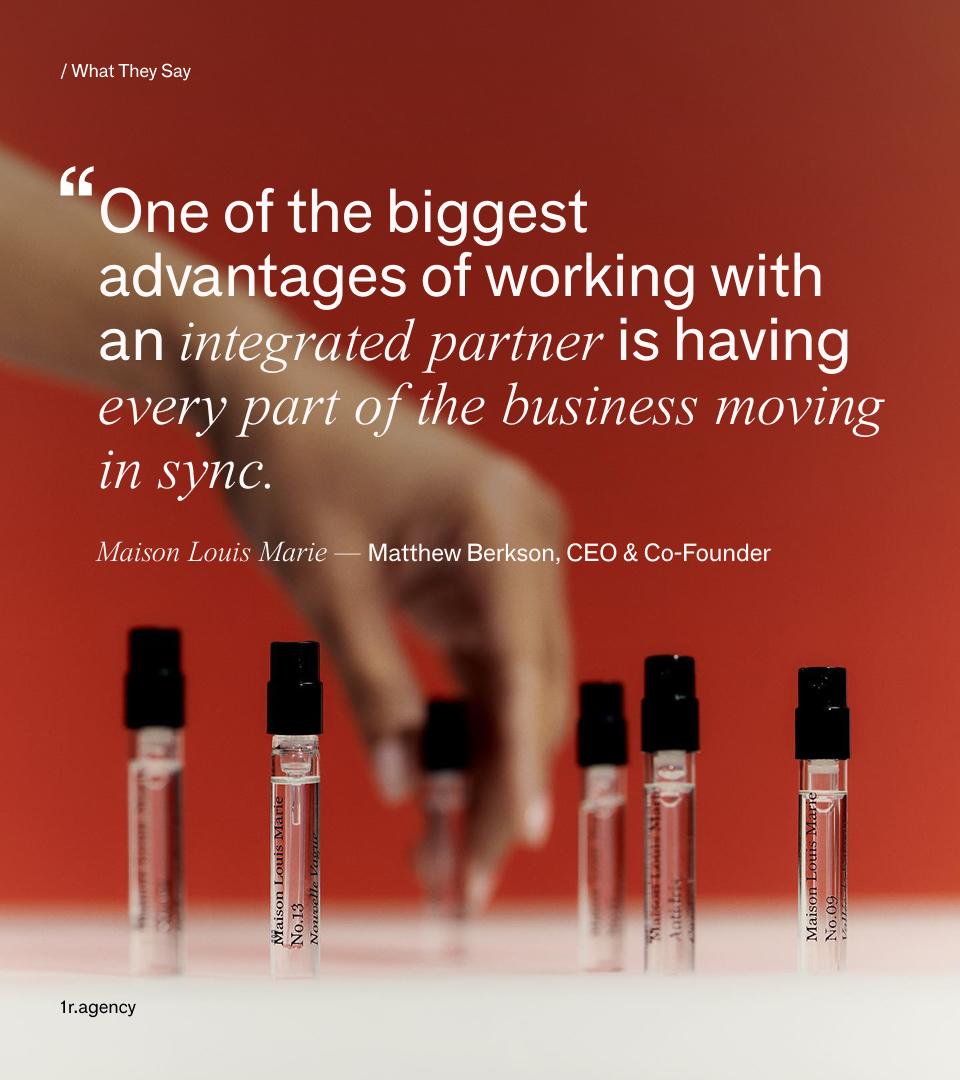
Why More Ecommerce Brands Are Replacing Multiple Agencies With Strategic Commerce Partners
The operational shift happening across modern ecommerce teams as brands prioritize alignment, efficiency, and connected growth.

The $5M–$15M DTC Brand Has The Hardest Job In ECommerce
You're not underperforming. You're running the wrong operating model for this stage.

1r Agency Founder Shelly Socol Named to Inc.’s 2026 Female Founders 500
View the full list of honorees